


30 Jan 26
Product Concept Testing for USA Inventors and Entrepreneurs
Every inventor remembers this moment. The idea is clear. The sketch makes sense. The excitement is real. Then doubt quietly steps in....
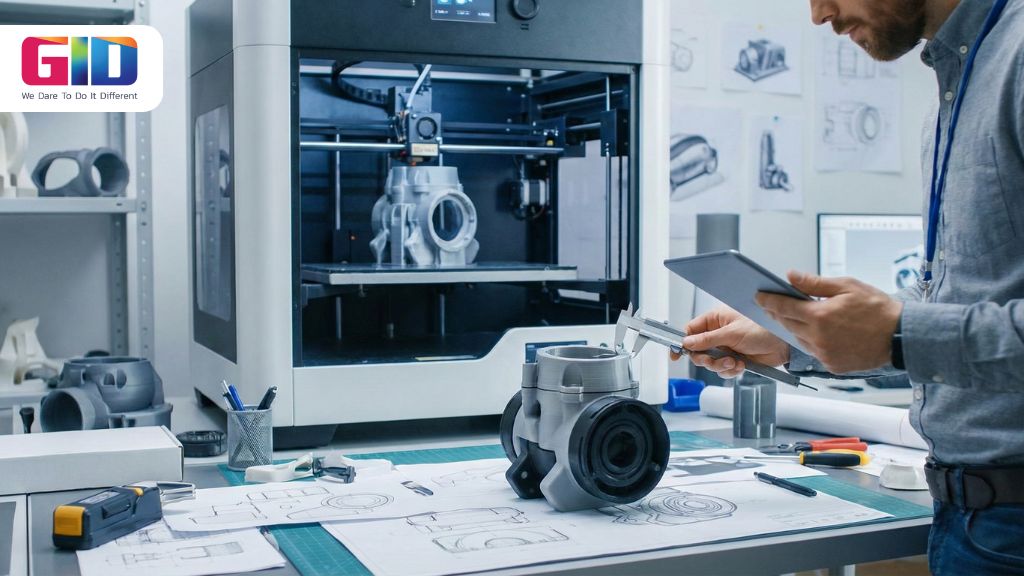
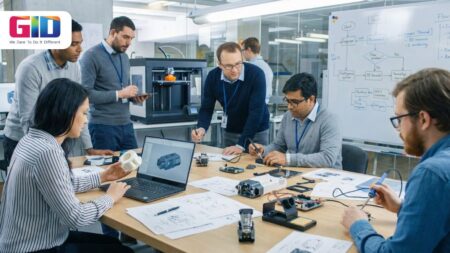
Every product starts quietly. A sketch on a napkin. A rough CAD file saved late at night. A concept that feels promising but fragile at the same time. At this stage, most ideas don’t fail because they’re bad—they fail because they stay theoretical for too long.
At GID Company, we’ve seen this moment again and again with founders and product teams across California, Texas, Florida, Arizona, Utah, and Georgia. The turning point is always the same. The idea needs to become something real. Something you can hold, test, break, and improve. That’s where speed matters—and where the right approach changes everything.
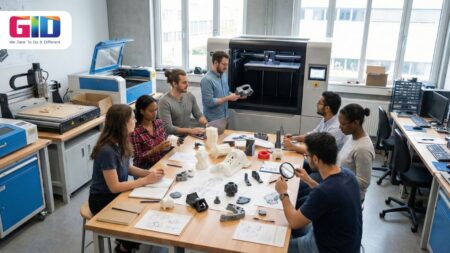
The first time an idea becomes physical, clarity follows. Questions get answered quickly. Assumptions either hold up or fall apart. This is why 3D printing and prototype development plays such a critical role early on.
At GID Company, we don’t treat prototyping as a box to check. We treat it as a learning engine. Instead of waiting months for certainty, we help teams test fast, learn fast, and adjust before expensive decisions are locked in. Whether a founder is based in Los Angeles or a startup team is working out of Austin or Atlanta, the goal is the same—reduce risk early while momentum is still high.
Early prototypes aren’t about polish. They’re about answers. When teams try to perfect too soon, they slow learning. We guide clients to focus on what truly needs validation first—form, fit, or basic function—so progress keeps moving forward.
The first 3D print prototype shouldn’t try to do everything. It should answer one important question clearly. Does it fit the hand correctly? Does it assemble the way you imagined? Does the size feel right in real life?
At GID Company, we help clients scope that first print intentionally. Instead of overbuilding, we define the single learning objective and design around it. This keeps costs down and insight high, especially for early-stage teams in fast-moving markets like San Diego, Phoenix, or Tampa.
Choosing what to test first depends on where uncertainty lives. We help teams identify that uncertainty quickly so the prototype delivers value—not noise.
One prototype is never the end of the story. The real power of 3D prototyping comes from iteration. Print. Test. Learn. Adjust. Repeat.
At GID Company, we structure this loop carefully. Each iteration has a purpose. Each revision answers a specific question. This keeps teams from spinning in circles and ensures that every prototype pushes the product closer to readiness. For teams spread across Utah, Texas, and Florida, this structured approach keeps everyone aligned—even when timelines are tight.
Iteration without direction wastes time. We define clear decision points so teams know when to revise, when to pivot, and when to move on.
Not all prototype partners think beyond the printer. A true 3D prototype maker understands how design decisions today affect manufacturing tomorrow.
At GID Company, we look past the machine. We consider tolerances, materials, assembly logic, and downstream scalability. This helps clients avoid surprises later—especially when moving from early prints to more advanced production methods.
We often support CAD refinement, part segmentation, and design-for-manufacturing thinking alongside printing, creating prototypes that don’t just look right—they make sense.
Searching for the best prototype companies near me usually means one thing: trust. Speed matters, but so does communication, guidance, and predictability.
At GID Company, we help teams across California, Arizona, and Georgia navigate these early decisions with clarity. We don’t just execute files—we ask the questions that protect timelines and budgets.
Silence, vague timelines, and zero feedback are costly. A good partner explains what’s happening and why.
Whether clients are local or remote, searching for prototype makers near me is often about responsiveness. We combine rapid turnaround with a structured process, allowing teams in cities like San Jose, Dallas, and Miami to move quickly without losing visibility.
Clients gain a roadmap, not just parts. Each prototype fits into a larger product strategy.
Eventually, desk tests aren’t enough. It’s time to print prototype versions that experience real use. That’s when material selection, strength, and durability matter more.
At GID Company, we prepare teams for this transition by aligning prototypes with realistic conditions. The result is better data, fewer surprises, and stronger confidence moving forward.
Ideas don’t become products by waiting. They become products by testing, learning, and improving—quickly and intentionally. 3D printing and prototype development gives teams the clarity they need to move forward without guessing.
At GID Company, we guide that journey. From the first print to meaningful iteration, we help transform fragile ideas into tested directions—so progress feels earned, not rushed.
CAD and STL files serve different but connected purposes in product development. CAD files are editable design files that contain precise dimensions, features, and engineering data. They are used during design and iteration. STL files, on the other hand, are simplified mesh files created specifically for 3D printing. At GID Company, we help clients understand when to work in CAD and when to generate STL files so the 3D printing and prototype process stays efficient. This distinction is critical because mistakes at this stage can lead to inaccurate prints, wasted material, and slower iteration cycles—especially during early prototyping.
CAD files act as the master source of truth throughout design and 3D prototyping. They allow changes, refinements, and engineering checks. STL files are derived outputs used only for printing. At GID Company, we manage both intentionally so revisions remain flexible while print-ready files stay optimized. This approach helps teams avoid rework and keeps prototype development moving smoothly across multiple iterations.
Yes, CAD files can be converted into STL files, and this step is essential for creating a 3D print prototype. However, improper conversion can introduce errors like rough surfaces or dimensional inaccuracies. GID Company supports this conversion process carefully, ensuring the STL file accurately reflects design intent before printing. This attention to detail protects learning cycles and avoids misleading test results.
Conversion typically happens inside CAD software by exporting the design as an STL. The challenge lies in selecting the right resolution and tolerances. At GID Company, we guide clients through this process so the print prototype reflects real-world dimensions and behavior. Done correctly, this step keeps iterations fast and reliable without sacrificing accuracy.
CAD files are used for design, engineering validation, and iteration, while STL files are used for 3D printing and prototype creation. At GID Company, CAD supports strategy and decision-making, while STL files enable physical testing. Understanding this separation helps teams manage revisions without slowing momentum.
Strength depends on use case, material, and orientation. SLA often offers higher detail, while FDM may provide better durability for certain tests. At GID Company, we help clients choose the right method during 3D prototyping so strength aligns with testing goals—not assumptions.
Cost varies based on volume, complexity, and material. FDM is often cheaper for early 3D print prototype iterations, while SLA may add cost for precision. GID Company helps balance budget with learning value so teams don’t overspend early.
SLA generally provides higher precision, while FDM prioritizes speed and durability. At GID Company, precision is chosen intentionally based on what the prototype must prove. This ensures every 3D printing and prototype decision supports smarter development.