


30 Jan 26
Product Concept Testing for USA Inventors and Entrepreneurs
Every inventor remembers this moment. The idea is clear. The sketch makes sense. The excitement is real. Then doubt quietly steps in....
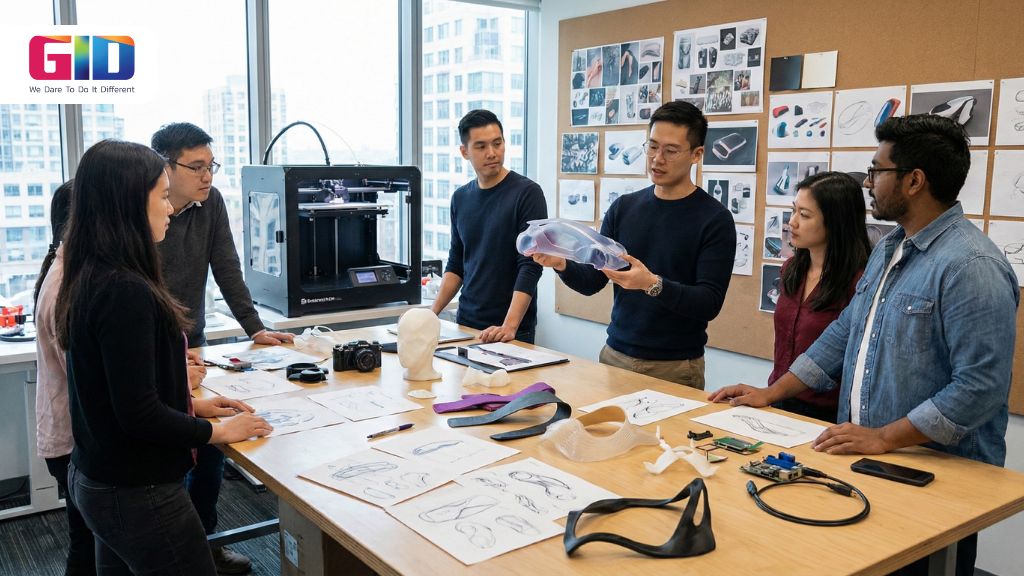
The moment usually comes quietly.
A prototype sits on the table. It works—mostly. The buttons respond. The form looks right. But something feels off. It doesn’t scale. It doesn’t feel manufacturable. And deep down, you know the next iteration could either unlock momentum or drain months of time and capital.
At GID Company, we see this moment often. Founders and product leaders across California, Texas, Florida, Arizona, Utah, and Georgia don’t come to us because they lack ideas. They come because innovation today moves faster than intuition alone can handle.
That’s where understanding why product design is changing—and how to apply those changes—becomes the difference between progress and frustration.
This is the story of how modern design thinking reshapes prototyping, and how we help teams turn uncertainty into buildable clarity.
Not every trend deserves attention. Some are noise. Others quietly redefine how products survive contact with real users, real factories, and real budgets.
At GID Company, we treat product design trends as signals, not slogans. They tell us where risk hides and where leverage lives—especially during prototyping, when decisions compound fast.
AI now accelerates early design exploration. Concepts evolve faster. Constraints surface sooner. But AI doesn’t understand user frustration, brand perception, or manufacturing nuance.
That’s why our approach blends machine speed with human decision-making. We use AI to expand options, then apply experience to narrow them into prototypes that make sense in the real world.
Sustainability is no longer a finishing touch. It starts at material selection, part count, and assembly logic.
For teams designing in California or scaling manufacturing in Texas, this shift changes how prototypes are evaluated. At GID Company, we guide teams to design for reuse, repair, and efficiency early—before sustainability becomes an expensive retrofit.
Products don’t live in slide decks. They live in warehouses, hospitals, vehicles, and job sites.
Modern product design trends emphasize accessibility, usability, and edge cases. We design prototypes that account for gloves, glare, fatigue, vibration, and speed—so testing reveals truth, not surprises.
AR and virtual walkthroughs now allow stakeholders to experience products before physical builds. This reduces misalignment and speeds decisions.
At GID Company, we use immersive review tools strategically—only where they meaningfully reduce prototype cycles and cost.
Innovation used to move in a straight line. Today, it loops, overlaps, and accelerates.
These product development trends demand tighter integration between design, engineering, and manufacturing from day one.
Siloed workflows delay truth. Modern development favors small, integrated teams that solve problems together.
At GID Company, our process intentionally blends disciplines early, so prototypes don’t collapse under manufacturing realities later.
Every prototype now feeds the next phase. Decisions must be traceable. Assumptions must be visible.
We help teams build a digital thread that carries intent from concept through prototyping and into production readiness—especially critical for distributed teams across Florida, Georgia, and the Southwest.
Manufacturing constraints no longer wait politely at the end of development.
These recent trends in manufacturing shape prototypes almost immediately.
Automation, traceability, and quality expectations push production thinking upstream.
At GID Company, we design prototypes with manufacturing behavior in mind, not just form and function. That foresight prevents costly redesigns later.
Digital twins and simulations reduce risk, but physical prototypes still reveal human and environmental realities.
We balance both, helping teams choose the right validation method at the right moment.
Speed alone doesn’t create innovation. Direction does.
The latest trends in product design focus on flexibility, experience, and controlled iteration.
Modularity allows teams to adapt without starting over.
We help clients structure prototypes so changes are strategic, not disruptive.
A product can work perfectly and still fail.
At GID Company, we design prototypes that prove desirability alongside feasibility—so innovation resonates, not just functions.
This is where insight becomes action.
Our approach isn’t about following trends. It’s about translating product design trends into decisions that survive reality.
We guide teams through:
This is how uncertainty becomes momentum.
Every product journey reaches a turning point—the moment when a prototype stops being fragile and starts being credible.
That moment doesn’t come from trends alone. It comes from applying them with discipline, experience, and intent.
At GID Company, we help teams across California, Texas, Florida, Arizona, Utah, and Georgia move past guesswork and into confident execution—turning innovation into something you can actually build.
The most defining product design trend in 2025 is the shift toward experience-driven, manufacturing-aware design. Products are no longer judged solely on aesthetics or functionality. They are evaluated on usability, sustainability, scalability, and how smoothly they transition from prototype to production. At GID Company, we see teams struggling when trends are treated as surface-level inspiration instead of decision frameworks. The real opportunity lies in applying product design trends early, especially during prototyping, where cost and risk are lowest. Our role is helping teams translate these shifts into practical design choices that support long-term success rather than short-term novelty.
AI will not replace product design, but it will continue to reshape how design work is done. AI accelerates exploration, analysis, and iteration, yet it lacks human judgment, empathy, and contextual understanding. At GID Company, we use AI as an enhancement tool, not a replacement. It helps us evaluate options faster while designers and engineers make the final calls that affect users, branding, and manufacturing. The teams that succeed are those who integrate AI thoughtfully into their workflows without surrendering responsibility for decision-making.
Yes, product design is not only in demand—it is more critical than ever. As competition increases and development cycles shorten, companies need design decisions that reduce risk instead of introducing it. At GID Company, we see strong demand for designers who understand product design trends alongside engineering and manufacturing realities. Businesses no longer want isolated creativity; they want design that leads to viable, scalable products. This demand is especially strong in innovation-driven regions like California and fast-growing manufacturing hubs like Texas.
Product design has a strong future because products are becoming more complex, not simpler. As technology, regulations, and user expectations evolve, design serves as the bridge that aligns all constraints. At GID Company, we believe the future of product design belongs to teams who understand systems, not just surfaces. Design will continue to guide how products feel, function, and scale, making it essential for companies that want sustainable innovation rather than one-off success.
The latest trends in product design for prototyping focus on speed with intention. Modular architectures, simulation-assisted testing, and experience-first validation now dominate early development stages. At GID Company, we help teams avoid the trap of building prototypes too quickly without learning anything meaningful. Modern prototyping must answer clear questions—about usability, feasibility, and manufacturability. These trends are powerful when applied strategically, not reactively.
The most important product development trends emphasize integration and traceability. Cross-functional collaboration, early manufacturing involvement, and data continuity define modern workflows. At GID Company, we align these trends into a single, structured process so teams don’t feel overwhelmed. When product development trends are applied correctly, they reduce late-stage surprises and improve confidence at every milestone.
Recent trends in manufacturing include automation readiness, quality traceability, and faster changeover expectations. These shifts affect how products must be designed from the start. At GID Company, we help teams understand how recent trends in manufacturing should influence early prototypes, not just final production designs. This foresight is especially valuable for teams operating across multiple regions or preparing for scale.
A digital twin is a virtual representation of a product used to simulate performance, assembly, or behavior. It matters because it allows teams to test assumptions before committing to physical builds. At GID Company, we use digital twins selectively, pairing them with physical prototypes to capture both technical and human insights. When used correctly, this approach reduces cost, shortens timelines, and improves confidence in design decisions.