


30 Jan 26
Product Concept Testing for USA Inventors and Entrepreneurs
Every inventor remembers this moment. The idea is clear. The sketch makes sense. The excitement is real. Then doubt quietly steps in....
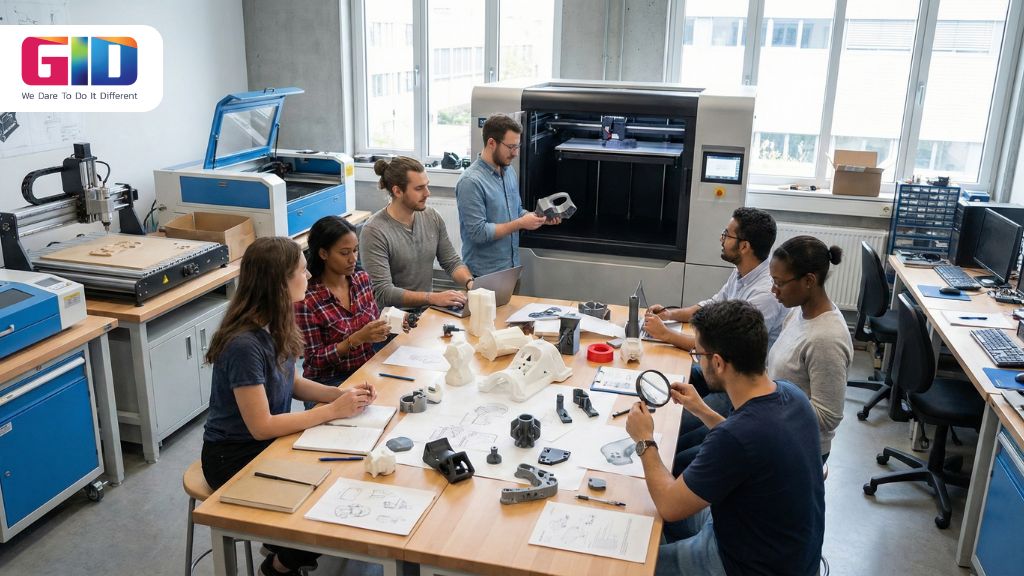
It usually starts quietly. A half-folded notebook. A rough sketch on the back of a receipt. A thought that keeps circling your mind long after the day ends. You can see the product clearly, but you can’t yet touch it.
That moment is familiar to inventors everywhere—from small home workshops in Texas, to startup garages in California, to late-night idea sessions in Florida, Arizona, Georgia, and Utah. The excitement is real. So is the uncertainty.
At GID Company, we meet inventors and entrepreneurs right at that crossroads. Not when the product is perfect—but when it’s still fragile. When the biggest question isn’t how to sell it, but how to build the right first version. That’s where smart prototyping changes everything.
Rapid prototyping services exist for one reason: to turn uncertainty into clarity as fast as possible. Not by guessing. Not by over-engineering. But by building, testing, learning, and refining with intention.
At GID Company, we don’t treat prototypes as finished products. We treat them as answers. Each prototype is designed to resolve a specific question—about size, strength, usability, or feasibility—before you invest further time or money.
For inventors across California, Texas, Florida, Arizona, Georgia, and Utah, our role isn’t just to fabricate parts. It’s to guide decisions. We help you move from imagination to evidence, without losing momentum or control of your idea.
One of the most common mistakes in rapid prototyping is building something that looks impressive but tells you very little. Smooth surfaces. Perfect symmetry. Zero insight into how the product behaves under real conditions.
Without guidance, inventors often spend early budgets creating prototypes that impress visually but fail functionally. That kind of misstep can stall progress before momentum ever builds.
Another trap is changing too much, too often. When rapid prototyping lacks structure, every revision feels urgent. Features pile up. Costs rise. Confidence drops.
Rapid prototyping should reduce risk—not multiply it.
Inventors searching for help in rapid prototyping services near me often discover a fragmented process. One shop prints parts. Another tweaks CAD. Someone else gives advice—but no one owns the outcome.
At GID Company, we eliminate that fragmentation by acting as the single point of accountability from concept through iteration.
Not every prototype needs to do everything. That’s the insight most inventors discover too late.
These focus on form, scale, and basic interaction. They answer questions like:
At this stage, materials, strength, and movement matter. These builds test stress points, tolerances, and mechanical behavior.
These prepare your product for manufacturing reality. They account for assembly, repeatability, and production constraints.
GID Company helps inventors sequence these stages properly, so rapid prototyping always moves forward—never sideways.
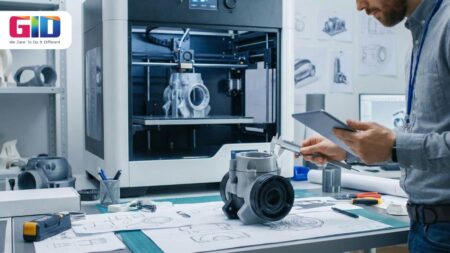
Rapid prototyping 3D printing has transformed how fast ideas can become physical. But speed alone doesn’t guarantee progress.
That’s why GID Company never treats printing as the goal. We use it as a tool—one that fits into a broader prototyping strategy aligned with your product’s future.
When inventors search for rapid prototyping services near me, they’re really searching for responsiveness. Clarity. Speed of feedback.
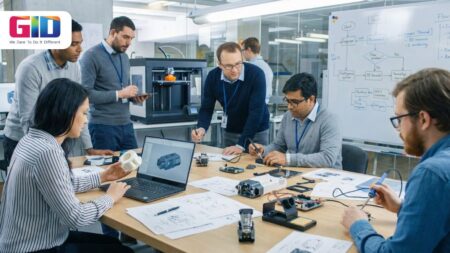
Whether you’re based in California, Texas, Florida, Arizona, Georgia, or Utah, GID Company supports tight iteration cycles through structured reviews, clear testing criteria, and real collaboration.
Near doesn’t just mean physical distance. It means being close to your goals, your timeline, and your constraints.
Professional rapid prototyping services aren’t defined by machines. They’re defined by process.
At GID Company, professionalism shows up as:
Every prototype exists for a reason. Every revision has a purpose.
Searching for a product designer near me isn’t about aesthetics alone. Good design determines how a product is used, understood, and trusted.
A prototype without design thinking often leads to costly revisions later. GID Company integrates product design and engineering early, so your prototype reflects both human behavior and technical reality.
That balance is what turns a prototype into a product foundation.
There’s a moment every inventor remembers. The first time the prototype doesn’t just exist—but explains itself.
You don’t just see it. You understand what works, what doesn’t, and what comes next. That clarity is the real outcome of rapid prototyping services done right.
GID Company exists to make that moment arrive sooner—and with fewer missteps.
Inventing is never linear. But progress doesn’t have to be chaotic. With the right rapid prototyping services, each step builds confidence instead of doubt.
Whether you’re developing your idea in California, Texas, Florida, Arizona, Georgia, or Utah, GID Company helps transform early concepts into tested, informed prototypes—ready for what comes next.
Rapid prototyping services are designed to help inventors and entrepreneurs transform ideas into physical models quickly so they can test, learn, and improve before committing to full production. These services combine design, engineering, and fabrication methods to create prototypes that answer specific questions—such as fit, usability, or functionality. At GID Company, rapid prototyping services follow a structured process. We begin by defining what the prototype must prove, then select the most appropriate methods to achieve that goal. This approach helps inventors reduce risk, control costs, and move forward with confidence instead of guesswork.
The cost of rapid prototyping services varies depending on complexity, materials, and the number of iterations required. Simple concept models may cost less, while functional or pre-production prototypes require more investment. What matters most is not just the price of a single prototype, but the value of what it teaches you. GID Company focuses on cost-effective prototyping by building only what’s necessary at each stage. This prevents wasted spending and helps inventors allocate budgets strategically as their product evolves.
Timelines for rapid prototyping depend on the prototype’s purpose and complexity. Some early-stage builds can be completed in days, while functional prototypes may take longer due to testing and refinement. At GID Company, speed is balanced with intention. We prioritize fast learning cycles rather than rushing builds that don’t deliver insight. This ensures inventors gain clarity quickly without sacrificing quality or direction.
Rapid prototyping is a process, while 3D printing is one of several tools used within that process. Rapid prototyping focuses on answering product questions through iterative builds, testing, and refinement. 3D printing is often used because it allows fast changes, but it isn’t always the best solution. GID Company helps inventors understand when 3D printing fits—and when other methods are more appropriate—so the prototype serves its intended purpose.
To begin rapid prototyping services, inventors typically need a concept description, sketches, or CAD files. However, having everything perfectly defined isn’t required. GID Company regularly works with early-stage inventors who only have rough ideas. We help translate those ideas into clear design and engineering requirements, ensuring the prototyping process starts on solid ground without unnecessary delays.
Material selection depends on what the prototype is meant to test. Some prototypes prioritize shape and ergonomics, while others need strength or durability. Common materials vary widely based on application. GID Company helps inventors choose materials that reflect real-world use without over-engineering early builds. This balance ensures prototypes provide meaningful feedback while staying cost-effective.
Yes, when done correctly. Rapid prototyping services should lay the foundation for future manufacturing, not create obstacles. Prototypes that ignore manufacturing constraints often require redesign later. GID Company incorporates manufacturability considerations early, helping inventors transition from prototype to production more smoothly. This forward-thinking approach saves time and reduces surprises down the road.
Most successful prototypes require both perspectives. Product designers focus on usability and form, while engineers ensure functionality and feasibility. GID Company integrates both roles within our rapid prototyping services so inventors don’t have to choose between them. This collaborative approach results in prototypes that are intuitive, functional, and ready to evolve into real products.